Open Shelves or Labeled Bins for Shared Pantry Items?
Open shelves or labeled bins for shared pantry items? Compare visibility, access and upkeep to choose a setup housemates can maintain with less friction.
Open shelves or labeled bins for shared pantry items? Choose the arrangement that makes it easiest for everyone to spot, reach and return the food they use. A shelf can expose what is running low; a bin can stop small packets from spreading across it. Most shared pantries work best with a deliberate mix rather than one rule for every item.
Let visibility decide what stays in the open
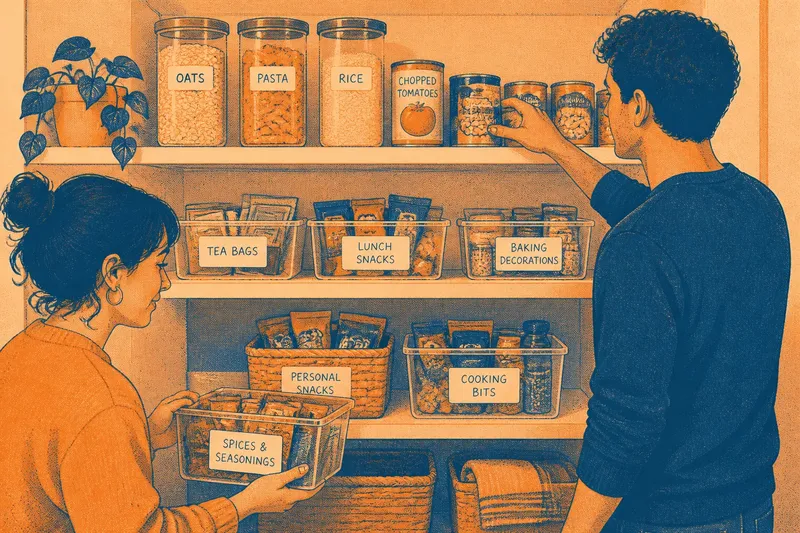
Open shelves suit items people need to recognise at a glance. Keep everyday staples such as oats, tins, pasta and tea in plain view, grouped by use. If a housemate can see the last tin of tomatoes without moving a cereal box, the stock is easier to notice and discuss.
Visibility only helps when items have a reliable place. Give each group a defined stretch of shelf, and avoid stacking products in front of one another. A deep row of jars can hide what sits at the back, making an apparently open shelf function like storage with a lid.
Reserve eye-level or otherwise easy-to-reach space for shared items used often. Less-used baking ingredients can sit higher or lower, provided everyone who needs them can reach them safely. Keep heavy jars and tins on a stable, accessible shelf rather than above head height.
Use bins to contain small or easily scattered goods
Labeled bins help with items that come in loose packets, slippery sachets or several similar varieties. Put snack bars, seasoning packets, baking decorations or tea bags in separate containers so they do not drift into neighbouring groups.
A bin also creates a clear boundary for a shared category. Instead of asking housemates to keep every packet aligned, ask them to return it to the container marked “spices” or “lunch snacks”. The label should describe what belongs there in words everyone uses; an overly narrow label can become confusing as the contents change.
Choose containers that can be lifted and cleaned without awkward handling. A clear, open-top plastic caddy is easy to scan; a shallow basket can suit light packets. Avoid stacking opaque tubs for everyday food, since the contents disappear and the container may be forgotten.
Match the container to how people reach for food
Think about the action, not just the category. Flour used for baking may need a stable, sealed container, while a packet of rice can remain on an open shelf if its packaging closes securely. Check the food packaging and storage directions before transferring anything; keep original labels or other essential information available.
Consider whether several people use an item at once. A large shared bag of snacks may be easier to access in a wide bin than in a narrow jar. For ingredients used in different ways, keep the common stock visible and put small, specialist items together in a clearly marked container.
Keep personal food distinct from shared supplies. A labelled personal basket or a designated shelf area can make ownership clear without covering the pantry in individual labels. Agree together what “shared” means for costly, unusual or specially purchased ingredients, rather than assuming that everything on the shelf is communal.
Open shelves or labeled bins for shared pantry items: what should you ask?
Which pantry items belong in open view?
Keep frequently used products and items that people need to monitor on open shelves, grouped by type. Leave enough room to see what remains, and avoid hiding packets behind taller containers.
Which items benefit most from labeled bins?
Use bins for small packets, loose sachets and categories that tend to spread. A short, familiar label works better than a detailed inventory that becomes outdated whenever someone adds a new variety.
Should pantry bins be clear or opaque?
Clear sides make contents easier to spot, while an opaque bin can hide visual clutter or personal packaging. If you choose an opaque container, label its front clearly and place it where users can pull it out without shifting other food.
How can housemates keep the arrangement useful?
Agree on a few group locations and labels, then let users return items within those boundaries. If the same container repeatedly overflows or stays empty, change its size or purpose rather than asking everyone to follow a fussy arrangement.
Keep the system easy to reset
Make the first layout modest. A shelf for breakfast, one for cooking staples and a bin for packets may be enough; add divisions only when a recurring mix-up gives them a clear purpose. Too many small zones demand more sorting than a shared pantry needs.
Say you and two housemates keep finding stock cubes among the tea and coffee. Move the cubes into one small, labelled cooking bin beside other savoury seasonings, leaving drinks visible on their shelf. The expected result is straightforward: someone looking for stock can find it without searching the drinks area, and anyone putting groceries away has a clear place to return it.
When restocking, leave the containers in place and put new items with their matching group. If a bin no longer fits its contents, remove an unnecessary divider or choose a roomier container; do not create a second location for the same category. One recognised home is easier to remember than a perfect-looking display.
For the best open shelves or labeled bins setup, judge it by what happens during an ordinary week: can people spot shared food, reach it without moving a pile, and put it back without asking? Keep the parts that support those actions and simplify anything that turns a quick pantry visit into a sorting task.